
The troll hefts its makeshift club and advances cautiously towards the glowing blue figure. He roars a challenge at the strange creature to show his dominance. But the blue figure is uncowed. She just smiles as she hovers above the ground and raises a single hand. The earth rumbles in response.
In my last post, I wrote about how my ethnic identity and that of my birthplace have been the site of an internal conflict for a long time. I also noted how this inner turmoil was manifested in my writing. In this post, I’d like to explore what that conflict would look like in my fiction and whether western fantasy and Muslim fantasy can coexist. Western fantasy is what I grew up reading and have read for most of my adult life. This is heavily influenced by J. R. R. Tolkien’s The Lord of the Rings trilogy, C. S. Lewis’s Narnia Chronicles, Robert E. Howard’s Conon the Barbarian, Ursula Le Guin’s Earthsea Series, Ann McCaffery’s Dragonriders of Pern, Michael Moorcock’s Elric of Melnibone and H. P. Lovecraft’s The Call of Cthullu
What is Muslim fantasy? Muslim fantasy is a subgenre that takes its influences from Muslim history, mythologies and history. It may contain elements of Islamic mysticism, inventions from the the so-called Golden Era (8th to 14th Century), stories about jinns, depict Islamic architecture, and even discuss philosophy. Classical influences include the One Thousand and One Arabian Nights, The Travels of Ibn Batutta and the Hamzanama. When I started writing, I wasn’t aware of any Muslim fantasy writers, however, in the comic books world Saladdin Ahmed and G. Willow Wilson were beginning to gain a reputation. G. Willow Wilson’s Alif the Unseen, is perhaps one of the best examples of Muslim fantasy, alongside Shannon Chakraborty’s The Daevabad Trilogy.
Let’s take a look at the bestiary available in Muslim fantasy. Djinns or Jinns are a staple and appear in many forms. Ifrits, Mareed, Si’la (shapeshifters) and Hin (possessed animals) are also different types of Jinn. Amongst the airborne creatures are dragons, burak (often depicted as a pegasus but noted in hadith only as a stead that travels at the speed of light), the Persian Simurgh and the Rukh (Roc). From Pakistan there are also diyo (trolls), charels (hags) and parees (fairies). So there is a rich tapestry to pick from.
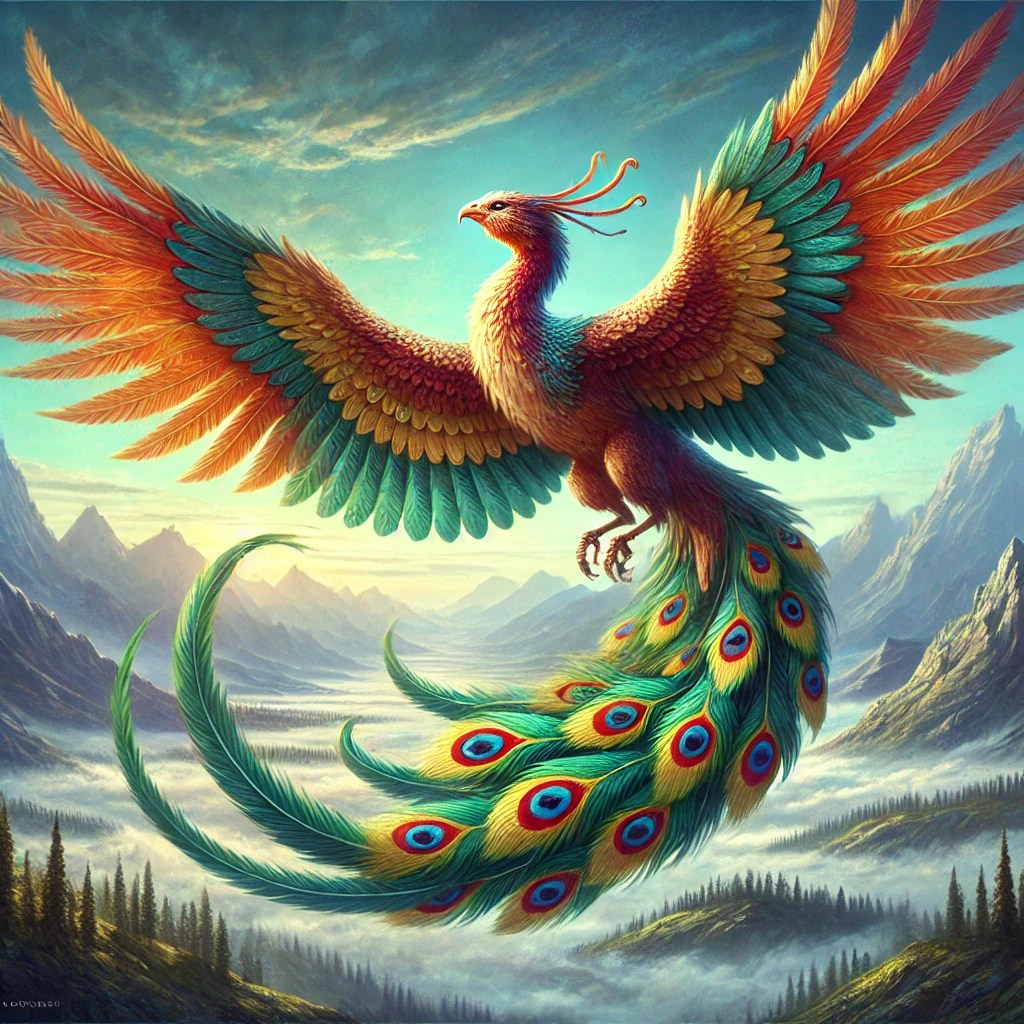
I am of the opinion that these mythical creatures can co-exist with the more western elves, goblins and orcs. In fact, I think there is a good chance that there is a lot of cross over, for instance dragons and flying horses seem to be quite universal, as are fairies. Therefore, in my fiction, you can expect to find desert elves and mountain trolls living alongside jinns that dwell in caves, in the wadis of the deserts and in the wastelands of the steppes. You have to be true to the environment. A desert elve isn’t going to be pale and golden haired like the elves of Mirkwood, nor are the dwarves of the Himalayan like peaks of South Asia going to be representative of Durin’s folk. The elves are going to have more in common with bedouins and the dwarves are likely to be like the Afghans. The sequel of The Changeling King was going to follow Sultan as he is cast to the other side of the world. In that story, he was going to wander the lands trying to find somewhere to call home. He would come across various species and make various new friends and enemies, a bit like Ibn Batutta or Marco Polo. However, that project has been shelved for the mean time. I have been playing around with another idea for quite a few years though, based in a world that has its supernatural beings but don’t feature quite as prominently. More on that another day.
For now, if you have read any Muslim fantasy or you know of a Muslim fantasy author who predates me and my Gen-X contemporaries let me know in the comments section.
Discover more from NOOR A JAHANGIR
Subscribe to get the latest posts sent to your email.


I can’t wait for your upcoming project your going to do amazing and I can’t wait for it 🙂