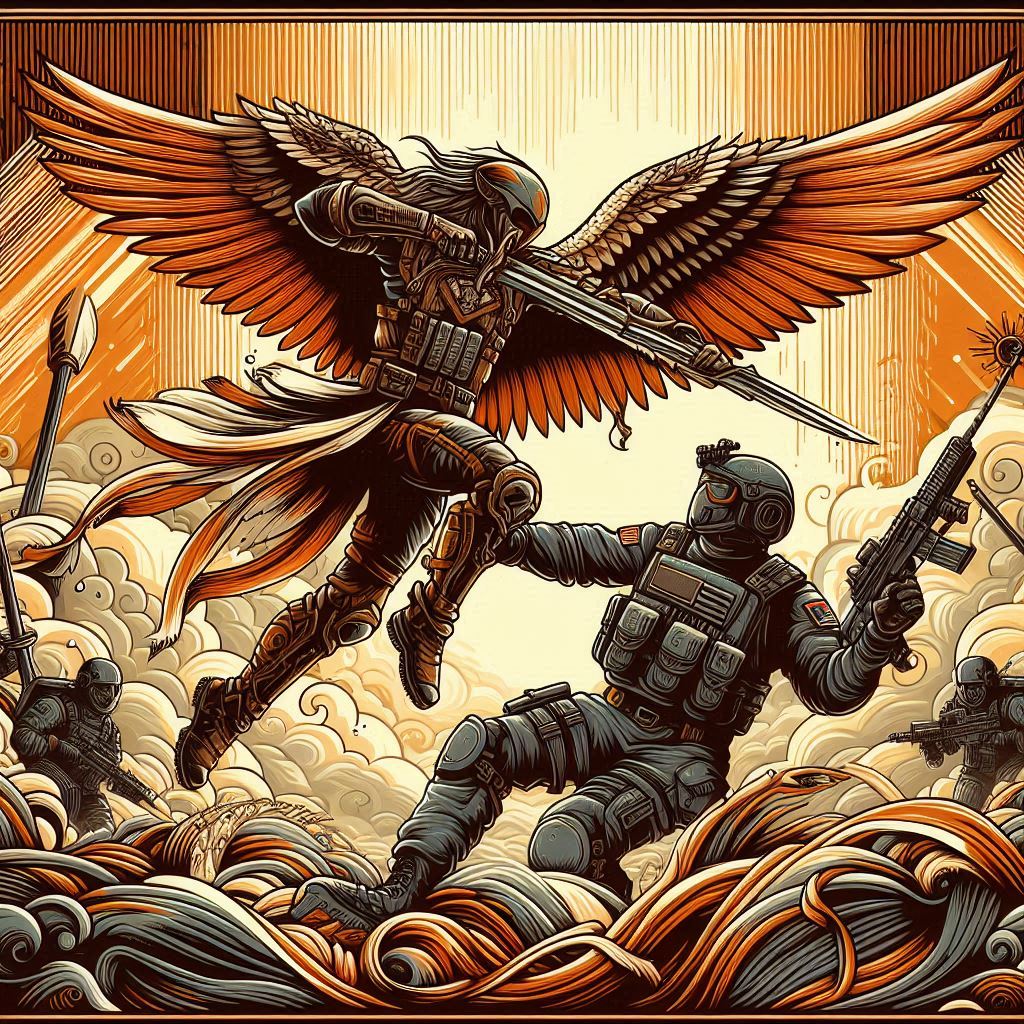
Depictions of violence are a staple of genre fiction. This can serve a number of purposes, least of all the glorification of violence. War in The Lord of the Rings was a reflection of the trauma experienced by Tolkien in the trenches. Abercrombie shows the fruitlessness of the cycle of violence in his First Law books. The characters in my own book, The Changeling King, are sickened by the killings committed by their own hands. Humans are very capable of violence, but at the same time, our nature rebels against it. Fictional violence is a thrill ride, a safe way to feel adrenaline and watch high-stakes drama unfold without anyone actually getting hurt. Think about it: whether it’s orcs clashing with elves in Lord of the Rings or the gritty shootouts in Breaking Bad, these scenes keep us hooked, letting us experience the intensity of violence without real-world consequences.
But our brains know the difference, right? With fiction, we can go all in, cheering on an epic showdown or feeling the rush of a duel of blades, but it doesn’t hit the same part of us as real trauma does. We’re hardwired to separate what’s pretend from what’s real, which is why, despite the claims about “violent media causing real violence,” (a.k.a. the hyperdermic syringe effect), most people can enjoy action-packed stories without losing their grip on reality. In fiction, we see the villain fall, the hero rise, and feel that satisfying sense of justice or triumph—things we wouldn’t expect to happen in the real world. In the real world, bad guys like Netenyahu, Trump and Putin, just get another term in office. The good guys? They are normally buried in the rubble of their homes.
The trick, of course, is that not all fictional violence is the same. There’s violence that brings meaning, raises stakes, and deepens the story, and then there’s violence for shock value alone. The best storytellers know this difference. Take the gritty realism of Saving Private Ryan—it doesn’t glamourise war; it shows its brutal reality, making us feel the cost. Or The Hunger Games, which uses violence to call out the twisted spectacle of a society obsessed with entertainment. When violence in a story serves a purpose, it makes us think. When it’s just gore for gore’s sake, it can do the opposite.
In the end, we need this line between fiction and reality. Fantasy violence lets us explore dark themes, live through epic tales, and test our own sense of right and wrong without anyone getting hurt. Appreciating that boundary lets us enjoy the thrill and depth of fictional stories while keeping our empathy and morality intact for real life. So, next time you cheer for the hero with the bloodied sword, remember it’s just a story—and in the real world, the stakes are much higher.
Feel free to share your thoughts on the distinction between fictional and real violence in the comments. Hit the like button if you enjoyed the post and consider subscribing so that you get the next blog post straight to your inbox.
Discover more from NOOR A JAHANGIR
Subscribe to get the latest posts sent to your email.

